
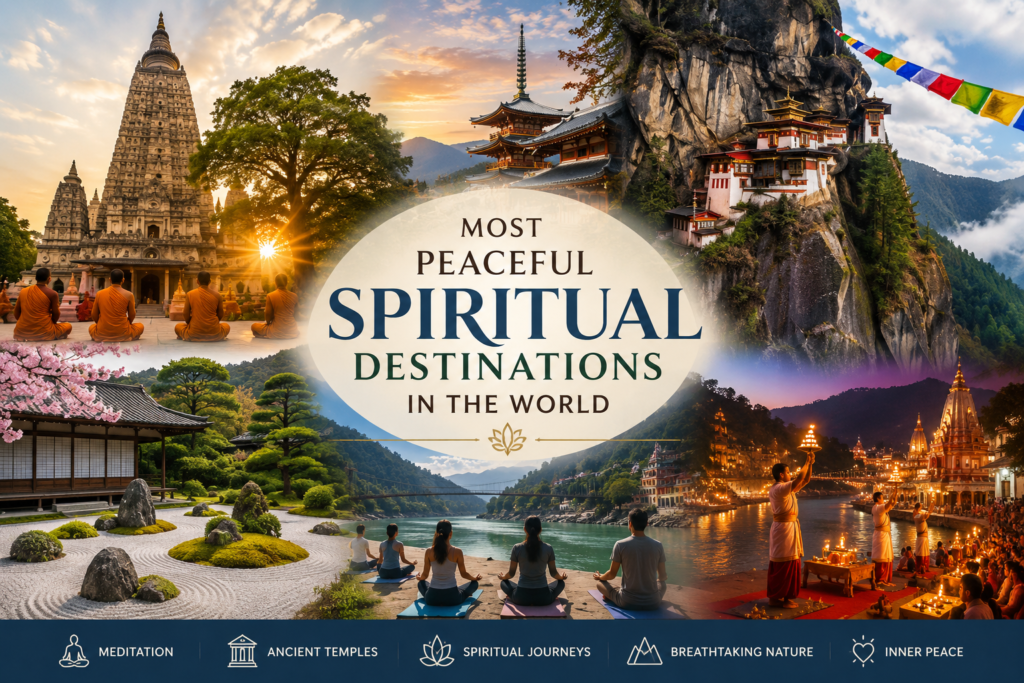
Sometimes, the most unforgettable journeys aren’t about checking famous landmarks off a bucket list—they’re about reconnecting with yourself. In today’s fast-paced world, many travelers seek peaceful spiritual destinations where they can find calm, reflect on their lives, and gain a deeper sense of purpose.
Whether it’s meditating in a centuries-old monastery, watching the sunrise over sacred mountains, or simply spending quiet moments in a serene temple, spiritual travel offers a chance to slow down and experience life from a fresh perspective. These destinations are more than places of worship—they are unique spaces where history, culture, and spirituality come together to create meaningful and lasting memories.
In this guide, you’ll discover some of the world’s most peaceful and inspiring spiritual destinations. Each one offers its own unique atmosphere and experiences, helping you embrace inner peace, mindfulness, and personal growth while making your journey truly unforgettable.
Table of Contents
Why Choose Peaceful Spiritual Destinations?
Spiritual travel is no longer limited to religious pilgrims. Today, people of all ages and backgrounds visit sacred destinations to find inner peace, escape the stresses of daily life, practice mindfulness, and immerse themselves in local cultures and traditions. These meaningful journeys offer an opportunity to slow down, reflect, and experience a deeper connection with both the destination and oneself.
Many peaceful spiritual destinations offer:
- Quiet surroundings
- Meditation retreats
- Ancient temples
- Natural beauty
- Opportunities for self-reflection
- Rich cultural experiences
These journeys often leave travelers feeling renewed and refreshed. Beyond physical relaxation, they also bring emotional balance, mental clarity, and a deep sense of inner peace, allowing people to return home feeling calmer, more centered, and re-energized.
Benefits of Visiting Peaceful Spiritual Destinations
| Benefit | Why It Matters |
|---|---|
| Mental relaxation | Escape daily stress and distractions |
| Spiritual growth | Explore different philosophies and beliefs |
| Cultural learning | Experience centuries-old traditions |
| Mindfulness | Improve focus and emotional balance |
| Nature connection | Enjoy serene landscapes that inspire calm |
How to Choose the Right Peaceful Spiritual Destination
Before planning your journey, take a moment to think about the kind of experience you’re looking for. Understanding your interests, expectations, and travel goals will help you choose a destination that truly matches your purpose and allows you to make the most of your spiritual journey.
Ask yourself:
- Do you want meditation or yoga retreats?
- Are you interested in ancient temples or monasteries?
- Would you prefer mountains, forests, or riverside settings?
- Is cultural exploration important to you?
- Are you looking for solitude or community experiences?
Choosing a destination that aligns with your purpose and intentions can make your journey far more meaningful. When the place you visit reflects your personal goals and expectations, the entire experience becomes deeper, more fulfilling, and truly unforgettable.
Peaceful Spiritual Destinations – Bodh Gaya, India
Why Visit Bodh Gaya?
Located in the Indian state of Bihar, Bodh Gaya is regarded as one of the most sacred Buddhist pilgrimage sites in the world. According to Buddhist tradition, it was here, over 2,500 years ago, that Gautama Buddha attained enlightenment beneath the sacred Bodhi Tree, making this destination a place of profound spiritual significance for millions of people.
Today, Bodh Gaya welcomes visitors from across the globe who come to meditate, explore Buddhist philosophy, and experience the peaceful atmosphere surrounding the Mahabodhi Temple Complex. Its serene surroundings and powerful spiritual energy offer a unique opportunity for reflection, mindfulness, and inner peace, leaving a lasting impression on everyone who visits.
Spiritual Significance
Bodh Gaya’s spiritual significance lies in its deep connection to the timeless values of wisdom, compassion, and mindfulness. Many visitors describe the city as a place where time seems to slow down, creating the perfect environment for quiet reflection and inner stillness. Its peaceful atmosphere encourages travelers to pause, reconnect with themselves, and gain a deeper sense of clarity and purpose.
Main Attractions
- Mahabodhi Temple
- Sacred Bodhi Tree
- Great Buddha Statue
- International monasteries
- Meditation gardens
Meditation Opportunities
Many monasteries in the area regularly offer guided meditation sessions that are suitable for both beginners and experienced practitioners. These sessions provide an opportunity to learn meditation techniques, calm the mind, and develop greater mindfulness under the guidance of experienced teachers, making the experience both meaningful and accessible for all visitors.
Best Time to Visit
October to March
The weather is pleasant, making it comfortable for sightseeing and meditation.
Travel Tips
- Dress modestly.
- Maintain silence inside temple areas.
- Remove footwear before entering sacred places.
- Carry a reusable water bottle.
Peaceful Spiritual Destinations – Kyoto, Japan
A City Where Tradition Meets Serenity
Renowned for its ancient temples, tranquil atmosphere, and beautifully preserved traditional gardens, Kyoto is considered one of Asia’s most important spiritual destinations.
Although it is a modern and vibrant city, Kyoto has carefully preserved its rich cultural and spiritual heritage. Home to hundreds of temples, sacred shrines, and serene Zen gardens, the city offers an atmosphere that inspires peace, meditation, and quiet reflection. This unique blend of timeless tradition and modern life makes Kyoto an ideal destination for travelers seeking spiritual enrichment while experiencing the depth and beauty of Japanese culture.
Spiritual Importance
For centuries, Zen Buddhism has profoundly shaped Kyoto’s culture and way of life. Visitors come here not only to admire its historic temples but also to take part in meditation sessions, experience traditional Japanese tea ceremonies, and even stay in temple lodgings for a closer look at the city’s spiritual lifestyle. These immersive experiences offer a deeper understanding of Japan’s rich spiritual heritage, embracing the values of simplicity, mindfulness, and self-reflection.
Must-Visit Places
- Kinkaku-ji
- Fushimi Inari Taisha
- Ryoan-ji
- Bamboo Forest
- Traditional Zen gardens
Local Culture
Respect, simplicity, and harmony are at the heart of Kyoto’s way of life. Taking part in a traditional Japanese tea ceremony or spending quiet moments in a serene Zen garden is more than just a cultural activity—it is a deeply calming experience that encourages mindfulness, inner balance, and a greater appreciation for the beauty of simplicity.
Best Time to Visit
- March–April (Cherry Blossoms)
- October–November (Autumn Colors)
Peaceful Spiritual Destinations – Paro Taktsang, Bhutan
The Legendary Tiger’s Nest Monastery
Perched dramatically on a sheer cliff about 3,000 feet above Bhutan’s Paro Valley, Paro Taktsang—better known as the Tiger’s Nest Monastery—is regarded as one of the world’s most breathtaking and spiritually significant destinations.
Reaching this sacred monastery requires a scenic hike through the mountains, making the journey itself an essential part of the experience. Along the way, stunning landscapes, peaceful surroundings, and a profound sense of spirituality create an atmosphere that encourages reflection, mindfulness, and a deeper connection with nature and oneself.
Spiritual Significance
According to local legend, Padmasambhava, also known as Guru Rinpoche, arrived at this sacred site riding on the back of a flying tigress, where he meditated in seclusion. This remarkable story is the reason the monastery is famously known as the Tiger’s Nest.
Even today, the resident monks continue to practice centuries-old meditation traditions and spiritual disciplines. Surrounded by breathtaking scenery and an atmosphere of deep tranquility, the monastery remains an inspiring destination for both devoted practitioners and travelers seeking peace, reflection, and spiritual insight.
Highlights
- Cliffside monastery
- Himalayan views
- Prayer flags
- Peaceful mountain atmosphere
- Guided meditation experiences
Best Time to Visit
March to May and September to November.
Travel Tips
- Wear comfortable hiking shoes.
- Start early in the morning.
- Stay hydrated.
- Respect photography restrictions inside sacred areas.
Peaceful Spiritual Destinations – Mount Koya, Japan
Japan’s Sacred Mountain Retreat
Surrounded by dense cedar forests, Mount Koya is regarded as one of Japan’s most peaceful and authentic spiritual destinations.
Founded over 1,200 years ago by the renowned Buddhist monk Kukai, this sacred mountain retreat is now home to more than 100 temples. With its rich spiritual heritage, serene atmosphere, and breathtaking natural beauty, Mount Koya offers visitors and practitioners from around the world a truly unique and deeply enriching experience.
Spiritual Importance
Visitors can stay overnight in temple lodgings known as shukubo, where they experience:
- Morning prayers
- Meditation
- Vegetarian Buddhist meals
- Traditional temple life
Main Attractions
- Okunoin Cemetery
- Kongobuji Temple
- Danjo Garan Temple Complex
- Cedar forest walking trails
Best Time to Visit
Spring and autumn offer pleasant weather and stunning natural scenery.
Responsible Travel Tips
- Speak quietly.
- Respect monks and worshippers.
- Avoid littering.
- Support local family-run businesses.
- Follow temple etiquette.
Peaceful Spiritual Destinations – Ubud, Bali, Indonesia
A Haven for Mindfulness and Wellness
Surrounded by lush rice terraces, tropical rainforests, and centuries-old temples, Ubud has earned its reputation as one of the world’s leading destinations for spirituality and wellness. While Bali is famous for its stunning beaches, Ubud offers a slower pace of life, where yoga, meditation, and traditional Balinese culture come together in perfect harmony.
Whether you’re joining a sunrise yoga session or spending a quiet afternoon reflecting in the peaceful courtyard of an ancient temple, Ubud’s serene atmosphere encourages inner peace, balance, and renewal. Every experience here invites you to slow down, embrace the present moment, and reconnect with yourself on a deeper level.
Spiritual Significance
In Bali, Hinduism is woven into everyday life rather than being confined to places of worship. Colorful offerings, known as Canang Sari, can be seen outside homes, temples, and shops as expressions of gratitude, harmony, and respect for nature, the divine, and life itself. These simple daily rituals offer a beautiful glimpse into Bali’s rich spiritual heritage and its philosophy of living in balance with the world around us.
Top Attractions
- Goa Gajah>
- Tirta Empul Temple
- Campuhan Ridge Walk
- Tegalalang Rice Terraces
- Local yoga and meditation centers
Best Time to Visit
April to October offers dry weather and ideal conditions for outdoor activities.
Travel Tips
- Dress respectfully when visiting temples.
- Carry a reusable water bottle.
- Book yoga retreats in advance during peak season.
- Hire local guides to learn about Balinese traditions.
Peaceful Spiritual Destinations – Rishikesh, India
The Yoga Capital of the World
Nestled along the sacred banks of the Ganges River, Rishikesh is a renowned destination that attracts spiritual seekers, yoga enthusiasts, and meditation practitioners from around the world.
Its peaceful atmosphere, the breathtaking backdrop of the Himalayas, and its vibrant ashram culture make Rishikesh one of the world’s most inspiring destinations for inner peace, self-reflection, and personal transformation. Every experience here offers an opportunity to reconnect with nature, embrace spirituality, and develop a deeper connection with yourself.
Why It’s Spiritually Important
For centuries, sages and yogis have meditated here, believing the region’s energy supports spiritual awakening.
Must-Visit Places
- Parmarth Niketan
- Triveni Ghat
- Lakshman Jhula
- Beatles Ashram
- Neelkanth Mahadev Temple
Meditation Opportunities
Many ashrams offer:
- Daily yoga classes
- Silent meditation retreats
- Ayurvedic wellness programs
- Spiritual discussions
Best Time to Visit
September to April.
Responsible Travel Tips
- Respect local customs.
- Avoid loud behavior near temples.
- Dress modestly.
- Support eco-friendly accommodations.
Peaceful Spiritual Destinations – Lhasa, Tibet
A Journey to the Roof of the World
High in the Himalayas, Lhasa is regarded as one of the most sacred and spiritually significant centers of Tibetan Buddhism.
Every year, thousands of pilgrims and travelers journey here to offer prayers, practice meditation, and walk the sacred pilgrimage routes surrounding its ancient monasteries. Rich in spiritual tradition, historical heritage, and a profound sense of tranquility, Lhasa continues to serve as a remarkable destination for faith, self-reflection, and spiritual discovery.
Spiritual Importance
Lhasa has been a center of Buddhist learning for centuries and remains a deeply respected pilgrimage destination.
Main Attractions
- Potala Palace
- Jokhang Temple
- Barkhor Street
- Sera Monastery
- Drepung Monastery
Best Time to Visit
May to October.
Travel Tips
- Spend a few days acclimatizing to the altitude.
- Drink plenty of water.
- Follow local regulations.
- Hire licensed local guides where required.
Peaceful Spiritual Destinations – Santiago de Compostela, Spain
Walking Toward Inner Peace
Unlike many spiritual destinations that are defined by their temples or monasteries, Santiago de Compostela is best known for the journey itself.
Every year, thousands of pilgrims and travelers walk hundreds of kilometers along the historic Camino de Santiago pilgrimage route to reach the city’s magnificent cathedral. More than simply a walk to a destination, this remarkable journey is regarded as a powerful experience of self-reflection, perseverance, and personal transformation. The pilgrimage concludes at the iconic Cathedral of Santiago de Compostela, a revered place of faith that has welcomed pilgrims for centuries.
Spiritual Significance
Although the Camino began as a Christian pilgrimage, today it welcomes people of every faith, culture, and background. Travelers from around the world embark on this historic journey in search of self-reflection, inner peace, emotional healing, or personal growth. This spirit of openness and inclusivity has transformed the Camino into much more than a religious route—it has become a deeply meaningful journey of self-discovery and a chance to see life from a new perspective.
Main Attractions
- Santiago de Compostela Cathedral
- Historic Old Town
- Pilgrim Museum
- Local plazas
- Traditional Galician culture
Best Time to Visit
April to June and September to October.
Travel Tips
- Pack lightweight hiking gear.
- Train before long-distance walking.
- Book accommodation early during peak pilgrimage months.
Comparison of the Best Peaceful Spiritual Destinations
| Destination | Country | Best For | Ideal Visit |
|---|---|---|---|
| Bodh Gaya | India | Buddhist pilgrimage | Oct–Mar |
| Kyoto | Japan | Zen culture & temples | Mar–Apr, Oct–Nov |
| Paro Taktsang | Bhutan | Himalayan meditation | Mar–May, Sep–Nov |
| Mount Koya | Japan | Temple stay experience | Spring & Autumn |
| Ubud | Indonesia | Yoga & wellness | Apr–Oct |
| Rishikesh | India | Yoga & meditation | Sep–Apr |
| Lhasa | Tibet | Tibetan Buddhism | May–Oct |
| Santiago de Compostela | Spain | Pilgrimage walks | Apr–Jun, Sep–Oct |
Budget Tips for Visiting Peaceful Spiritual Destinations
Experiencing a meaningful spiritual journey does not have to be expensive. With thoughtful planning and smart budgeting, you can enjoy deeply enriching and memorable experiences without overspending. A little preparation can help make your journey both affordable and spiritually rewarding.
- Travel during the shoulder season for lower accommodation costs.
- Choose guesthouses, monasteries, or temple stays where available.
- Use local transportation instead of private taxis.
- Eat at local restaurants to enjoy authentic cuisine at reasonable prices.
- Book flights and accommodations well in advance.
Safety Tips for Spiritual Travelers
Although most sacred sites are peaceful and welcoming to visitors, it is always important to travel with respect and responsibility. Honoring local customs, following site guidelines, and behaving with sensitivity not only enrich your own experience but also help preserve the dignity, cultural significance, and spiritual atmosphere of these special places.
- Keep copies of important documents.
- Respect photography rules inside temples and monasteries.
- Wear comfortable clothing and footwear.
- Stay hydrated, especially at high-altitude locations.
- Follow local customs and traditions.
- Secure your valuables in crowded pilgrimage areas.
- Purchase travel insurance before international trips.
Sustainable Spiritual Travel Practices
True spiritual travel includes caring for both people and the environment.
Here are a few simple ways to travel responsibly:
- Carry a reusable water bottle.
- Avoid single-use plastics.
- Support local artisans and small businesses.
- Follow marked trails to protect natural landscapes.
- Dress respectfully at sacred sites.
- Leave no litter behind.
- Be mindful of noise levels in places of worship.
- Learn about local customs before your visit.
By practicing sustainable tourism, you not only show respect and responsibility toward local communities but also help preserve the natural and cultural heritage of these sacred places. This approach ensures that future generations can continue to experience the same peace, beauty, and spirituality that these destinations offer today.
Frequently Asked Questions (FAQs)
1. What are peaceful spiritual destinations?
Peaceful spiritual destinations are known for their serene atmosphere, rich spiritual heritage, and opportunities for self-reflection. These places often include temples, monasteries, pilgrimage routes, sacred mountains, and meditation centers, where visitors can experience local traditions while also reconnecting with themselves on a deeper level.
2. Which country is best for spiritual travel?
There is no single country that can be called “the best,” as it entirely depends on personal preferences and the kind of experience one is seeking. India is renowned for its yoga, meditation practices, and ancient temples. Japan is known for its Zen monasteries and peaceful gardens, while Bhutan is celebrated for its deep Buddhist culture and its emphasis on happiness and mindful living.
3. Do I need to follow a religion to visit spiritual destinations?
No. Most spiritual places welcome visitors from all backgrounds. The main expectation is simply that visitors respect local customs, traditions, and dress codes, so that everyone can properly understand and appreciate the cultural and spiritual significance of these places.
4. What should I wear when visiting temples or monasteries?
Wearing simple and modest clothing is generally considered appropriate. In many sacred places, it is seen as respectful to cover your shoulders and knees. It is also helpful to wear comfortable shoes, as you often need to remove them before entering temples or meditation halls.
5. When is the best time to visit peaceful spiritual destinations?
The best time to travel depends on your destination and its climate. In many countries, spring and autumn generally offer the most pleasant weather, while certain pilgrimage destinations are best visited during specific seasons that are more comfortable and suitable for travel.
6. Are meditation retreats suitable for beginners?
Yes. Many meditation and retreat centers offer guided programs designed specifically for beginners, so even if you have never practiced meditation before, you can easily take part in these sessions.
7. How can I travel responsibly to spiritual destinations?
Choose eco-friendly accommodation, support local businesses, avoid littering, conserve water, and respect local customs. Traveling responsibly not only helps preserve sacred sites but also benefits the communities that care for and maintain them.
8. Can spiritual travel improve mental well-being?
Many travelers find that spending time in peaceful environments, practicing mindfulness, and taking a break from daily routines helps reduce stress and improve overall well-being. While experiences may vary from person to person, spiritual travel often encourages self-reflection, relaxation, and a refreshed perspective on life.
Conclusion
Exploring peaceful spiritual destinations is about much more than visiting famous landmarks. It’s an opportunity to slow down, embrace different cultures, and reconnect with what truly matters. Whether you’re meditating beneath the Bodhi Tree in Bodh Gaya, walking the historic Camino de Santiago, finding tranquility in Kyoto’s Zen gardens, or watching the sunrise over Bhutan’s Tiger’s Nest Monastery, each destination offers its own path to inspiration and inner calm.
The beauty of spiritual travel lies in its diversity. Some people seek peace in monasteries nestled in the mountains, while others find comfort in yoga retreats, sacred rivers, or ancient temples. Whatever your journey looks like, approaching these places with curiosity, respect, and full awareness can make your experience even more meaningful.
As you plan your next trip, choose a destination that not only satisfies your desire to explore but also supports your mental well-being and inner peace. Sometimes, the most memorable journeys are the ones that leave you feeling lighter, calmer, more grounded, and more deeply connected to the world around you.
Final Takeaway
The world’s most peaceful and spiritual destinations remind us that travel is not always about covering great distances—it can also be about forming a deeper connection with ourselves. By respecting local traditions, traveling responsibly, and embracing moments of quiet reflection, you can create memories that stay with you long after the journey ends.